Bunny’s public plea for forgiveness
The Death of Bunny MunroBunny’s public plea for forgiveness is the turning point in which a crowd’s anger gives way, gradually and collectively, to compassion. He cannot undo his past, and the scene does not present apology as erasure; instead, he asks to be heard and forgiven while committing himself to a different future, especially the care of his son. The audience’s response makes forgiveness a public act, while the appearance of Libby brings his appeal back to the loss and guilt at its center.
The Appeal and Its Stakes
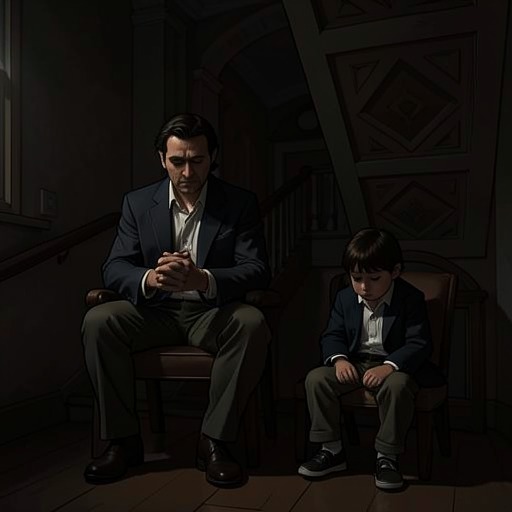
The plea follows Bunny’s question about why he survived. He explains that, after dwelling on why he had not died, he began thinking about how to live differently. He tells the audience that his father is dying of lung cancer and that he intends to look after him. He also says he will try to move through life with more dignity. Above all, he intends to care for his little boy, Bunny Junior. These plans give his appeal a concrete future: he is asking for more than a reprieve from judgment, and names responsibilities he means to take up.
His statement about Bunny Junior makes the stakes personal and immediate. Bunny says his son’s well-being matters more to him than anything else in the world. He acknowledges that he cannot turn back time or undo what he has done, but argues that, with the crowd’s help, he might change the course of his life and recover some self-respect. The appeal thus holds together admission and hope: the past remains irreversible, while his conduct from this point onward is still open to change.
From Hostility to Attention
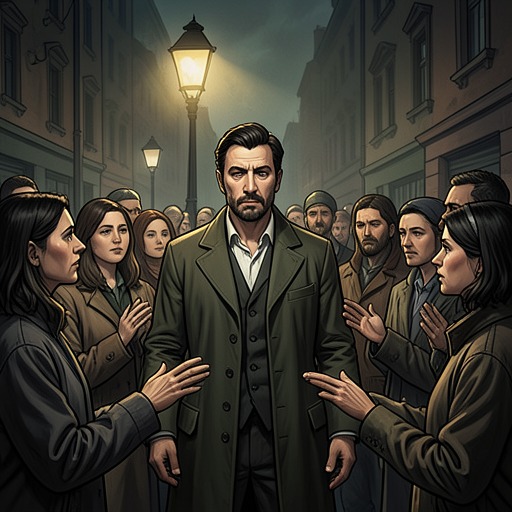
The crowd initially rejects him. People boo, hiss, and shake their fists. Mushroom Dave flicks a cigarette toward Bunny, where it bursts into sparks against his chest, intensifying the audience’s disdain. A wine glass spins across the room and breaks on the stage behind him. Charlotte Parnovar springs on her toes and makes threatening gestures, recalling the earlier occasion when she broke Bunny’s nose; River repeatedly points at him and shouts. From the centre of the room, Mrs Pennington angrily gestures toward him. Their different reactions make the audience’s hostility visible as a force surrounding the speaker, not simply a private judgment.
Bunny continues despite this response, and the crowd’s change begins with an interruption from within it. Someone—perhaps the blind Mrs Brooks, though the narration leaves the speaker uncertain—calls for quiet and asks that Bunny be allowed to speak. The audience gradually composes itself. When Bunny speaks about the depth of his love for his nine-year-old son, a wave of sympathy passes through the room; someone calls him a poor man, and the anger slowly recedes. The sequence does not make the audience forget its grievances. Rather, attention to Bunny’s dependence on, and love for, his child alters what the crowd is prepared to hear.
Apology and Collective Forgiveness
As the audience settles, Bunny steps forward and holds his hands out to either side. He bows his head, then raises it and says that he is truly sorry. He asks the crowd to find it in their hearts to forgive him. The gestures and words mark a shift from defending his future plans to directly seeking a response from the people he has addressed. The request is not a claim that forgiveness is owed: it leaves the decision with the audience.
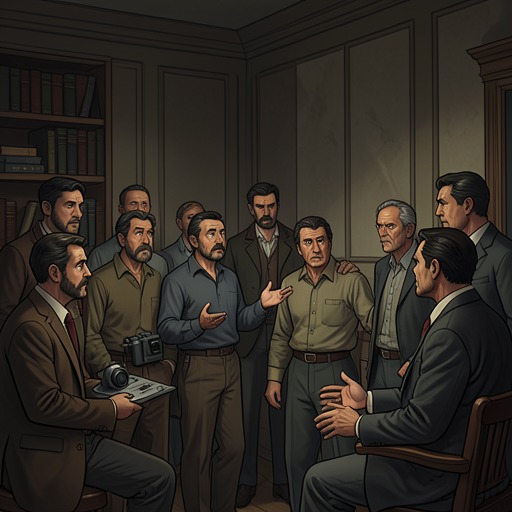
The answer develops through individual reactions that gather into a shared response. Georgia sobs while Zoë and Amanda comfort her. Women from The Funky Buddha and The Babylon Lounge wipe tears from one another’s eyes, and applause spreads through the audience. Bunny descends three short steps from the stage into the crowd. River embraces him and forgives him; Mushroom Dave does likewise. A young woman identified as a junkie smiles at him and forgives him, as do women from McDonald’s, Pizza Hut, and KFC, who hold him and kiss him. Mrs Pennington approaches with her husband, who is in a wheelchair; she raises her arms, and she and Bunny embrace and weep together.
The forgiveness continues across differences in the crowd. Charlotte Parnovar, dressed as Frida Kahlo, hugs Bunny and forgives him. Mrs Brooks reaches out to him, and he receives her forgiveness too. Others kiss, hug, and pat him on the back. The scene gives the change no single author: one person calls for quiet, but the response grows through many separate gestures. Its movement from boos and thrown objects to applause and embraces makes forgiveness a collective choice rather than a verdict delivered by one authority.
Libby and the Limits of the Moment
As Bunny moves through the crowd, the scene takes on an uncanny quality: he notices frost in the air and sees Libby, his wife, dressed in her orange nightdress. The crowd parts as he moves toward her. His public plea becomes, in that encounter, a direct appeal to the person whose absence and memory have shaped his grief. He asks Libby to forgive him and tells her that he had gone somewhat crazy because he missed her so much. She responds dismissively, suggesting there is plenty of time to deal with that. The exchange does not settle whether this encounter is an actual reunion or a vision; it presents Libby within the same heightened scene as the crowd’s forgiveness.
The event’s emotional resolution is therefore real but not equivalent to undoing harm. The audience’s response gives Bunny a chance to move forward with self-respect, while his stated intention to care for Bunny Junior supplies a measure of what that change must involve. His appeal to Libby, meanwhile, leaves his grief and request for personal forgiveness in view. By ending the public movement toward reconciliation with this intimate address, the scene connects communal pardon to a more difficult reckoning with the people closest to him.